
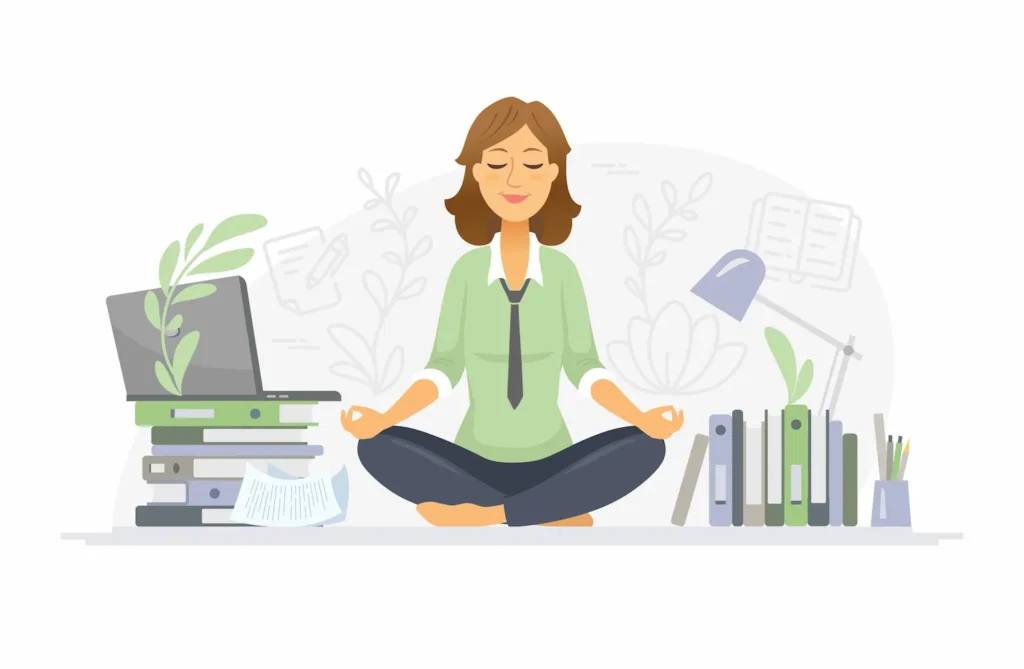
Mindfulness may not change your busy work day, but it can change how you deal with it. Here are some ways mindfulness can improve your experience at work
How many times have you crawled into bed at the end of a busy day and thought where did the day go? Or eaten lunch in front of the TV and suddenly your meal is gone, but you don’t remember tasting it?
It’s not just you. We could all use a little more mindfulness in our lives. The research is in: it’s good for you.
Mindfulness basically means being aware of your thoughts and actions. This practice can help you grow as a person and appreciate the moments of your life. We’re going for presence, not unconsciousness. Sometimes “mindfulness” seems like a buzzword. In a lot of ways it is… but the concept has been around for thousands of years.
Mindfulness has a place in almost every aspect of your life, including work. Recent studies show that mindfulness at work can improve employee satisfaction, communication, and morale––so yes, please! In fact, several corporations have recently brought mindfulness classes into the office.
Mindfulness may not change your busy work day, but it can change how you deal with it. Here are some of the ways mindfulness can improve your experience at work:
- Creating mental space. If you feel like you’re constantly rushing from one thing to the next, a mindfulness practice can encourage you to pause and take a deep breath, calming your nervous system, and resetting your thoughts before tackling the next thing.
- Delegation. Perhaps upon reflection, you realize you’re trying to juggle too much, and your tasks aren’t being completed to the level you want. Would the task be in better hands with someone else? Are you hoarding tasks because of some underlying motivation, such as not wanting to ask for help, feeling like only you can do it right, or assuming you’re scoring major brownie points with your employer by taking on too much? Mindfulness can help you identify the why here. Perhaps you can reflect on the strengths of your coworkers and give someone else an opportunity to excel (and get something off your already full plate, too).
- Clarity. The more present you are, the more you can sort through the mind chatter. Mind chatter is full of stories that may or may not be true. The more clarity you cultivate within yourself, knowing your values, motivations, goals, and strengths, the more clarity you will possess about who you are and what you stand for. This is especially helpful when faced with decision making.
- One thing at a time. Did you know that multitasking is a myth? People aren’t multitasking. They’re doing several things worse than if they paid each task singular attention. But the added bonus of mindfulness is that by tackling only one task at a time, you’re focusing––a tool that needs strengthening just like any other.
- Let go of the ego. When something goes wrong, a strong ego structure will do gymnastics to try to find someone else to blame, which ultimately causes you more pain. The ego is easily bruised and can tell you untrue stories about other people’s motivations. Learning to observe your ego is helpful in all situations from the workplace to the commute home.
Mindfulness Practices to Try at Work and Home
- Keep a time journal. Where does your time go each day? Are you spending endless hours scrolling social media, when what you really crave is human connection or intellectual stimulation? Are you getting as much exercise as you think you are? A time journal also illuminates which projects require the most attention, and can perhaps help you better streamline how much time you should a lot for other tasks.
- Practice gratitude. Gratitude is powerful. Taking time to think briefly of the things you’re grateful for can have a huge impact on your life. Gratitude is helpful to mitigate negative emotions such as resentment.
- Meditate. Yep, that one. But truly, it lives up to its hype. Pro tip: don’t think of it as trying to have no thoughts. Instead, observe your thoughts. As you get better at this, you can try to focus them in a certain direction. Even sitting quietly for three minutes a day is beneficial.
- Find your feet. If you’re at your desk feeling stressed out, first sit squarely with your feet on the floor. Feel your feet inside your shoes. Can you get a sense for their shape? What do the soles of your feet feel? Press down into your feet, feeling your leg muscles tighten, your spine straighten. If you can, take a small walk around the office and focus on your feet as you walk. This is a simple daily practice to bring your awareness back into your body.
Enjoy exploring the never-ending practice of mindfulness. Remember, it’s a practice, not a destination.