
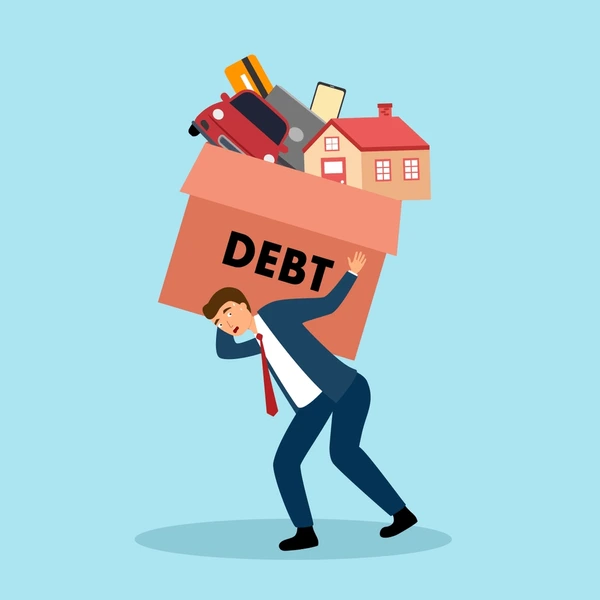
Taking on debt can feel overwhelming, let’s talk about the steps you can take to control your finances!
Debt is everywhere. 340 million Americans are in some form of debt. Excluding mortgages, the average American is approximately $80K in debt.
Debt comes with some serious baggage, but it doesn’t need to. Handling your debt responsibly can actually do good things for your finances, like raising your credit score. In the case of mortgage lending, your initial debt often increases in value, which makes you money in the long run.
Paying off debt is something most people deal with at some point in their lives, and there are several excellent strategies to do so. The strategy that will be best for you depends on the type of debt you have, the amount of income you’re able to allot to debt repayment, and a few other factors.
Step 1: Know What You’re Working With
Make a list of everything you owe, from your credit card to your car loan and so on, noting the value of the debt, the minimum payment, and the interest rate. Getting all of these numbers in one place will help you decide which strategy will work best for you.
Step 2: Revisit Your Budget
If you’re relying on paying the minimum payment for each of your debts every month, you aren’t going to reach the finish line very quickly.
Revisiting your budget should involve taking a look at your lifestyle. No, this isn’t the “you can’t go to a restaurant unless you’re working there” debt-shaming rhetoric that only adds insult to injury. But you do need to get real about your needs and your wants. If you’re in a lot of debt, the spending you allocate to your “wants” list needs to decrease. Do you need all the streaming services, or would you be okay with just one at a time for the next few years? Though this change is less than $20/month, if you make two or three of these changes, that’s often enough to double or triple the minimum payment you’ve been making on a credit card or smaller loan.
Don’t be extreme here. Much like going on a strict diet, often extreme financial restrictions in the short term will lead to overspending after only a few weeks of “being good.” Also like a diet, the best choice is to find something that works for you and that you can maintain. You don’t necessarily need to put your life on hold to make serious strides toward paying off your debt.
Step 3: Pick a Strategy
Though the strategies vary, there is one main takeaway: don’t keep making small payments towards all of your debts at the same time. That only prolongs how long the debt lasts. Prioritize paying one balance down at a time while making minimum payments on the others to avoid penalties.
The three main strategies for paying off debt are:
- The Snowball Approach. This method involves paying off your smallest debt first (excluding mortgage) while still paying the minimum payments on all other debts. All extra money goes toward the debt until it is completely paid off. Once the first debt is paid in full, you snowball that payment (plus any more extra money) toward the next smallest debt, and so on. This approach helps you gain momentum and celebrate your wins rather than continue to get swept up in paying only the minimums month after month. There is a real psychological advantage to actually completing something that helps you stay motivated as you tackle the next debt.
The biggest drawback to this approach is that you may end up spending a lot in interest on your larger loans. If you have a larger loan with high interest, then the next approach may be more beneficial to you. - The Avalanche Approach. This method involves putting all available funds towards your highest-interest debt first, while paying the minimum on all other debt. The idea is to save money in the long run by extinguishing the highest interest payments first. Once you completely pay off the highest interest loan, you snowball that payment into the next highest-interest loan.
The Avalanche Approach works well for people who are losing money to high interest rates. The biggest drawback is that completely paying off a loan may take a while, therefore delaying the motivation that comes with a small win.
- The Consolidation Approach. If you often feel bogged down trying to stay on top of due dates, interest rates, and all the other variables regarding your loans, a consolidation approach may be the best choice for you. This involves rolling all of your debt into one place, such as a low-interest balance-transfer credit card or by covering it with a fixed-rate debt consolidation loan. Now you’re making one payment at a time. Depending on the interest rate you are able to secure (having good credit will help), you can save quite a bit of money by not having multiple high-interest loans.
The consolidation approach only works if your consolidated loan results in a lower interest rate than you started with. Otherwise, you’ll be spending more money on interest!
It is always a good idea to speak with a qualified financial advisor to help make these decisions. Remember, it’s never too late to take control of your finances!